The 6 pm problem: where after-hours calls go, and how a text-back catches them
A call to a closed shop doesn’t wait until morning. Here’s where it goes, and how a missed-call text-back gives it somewhere to land.
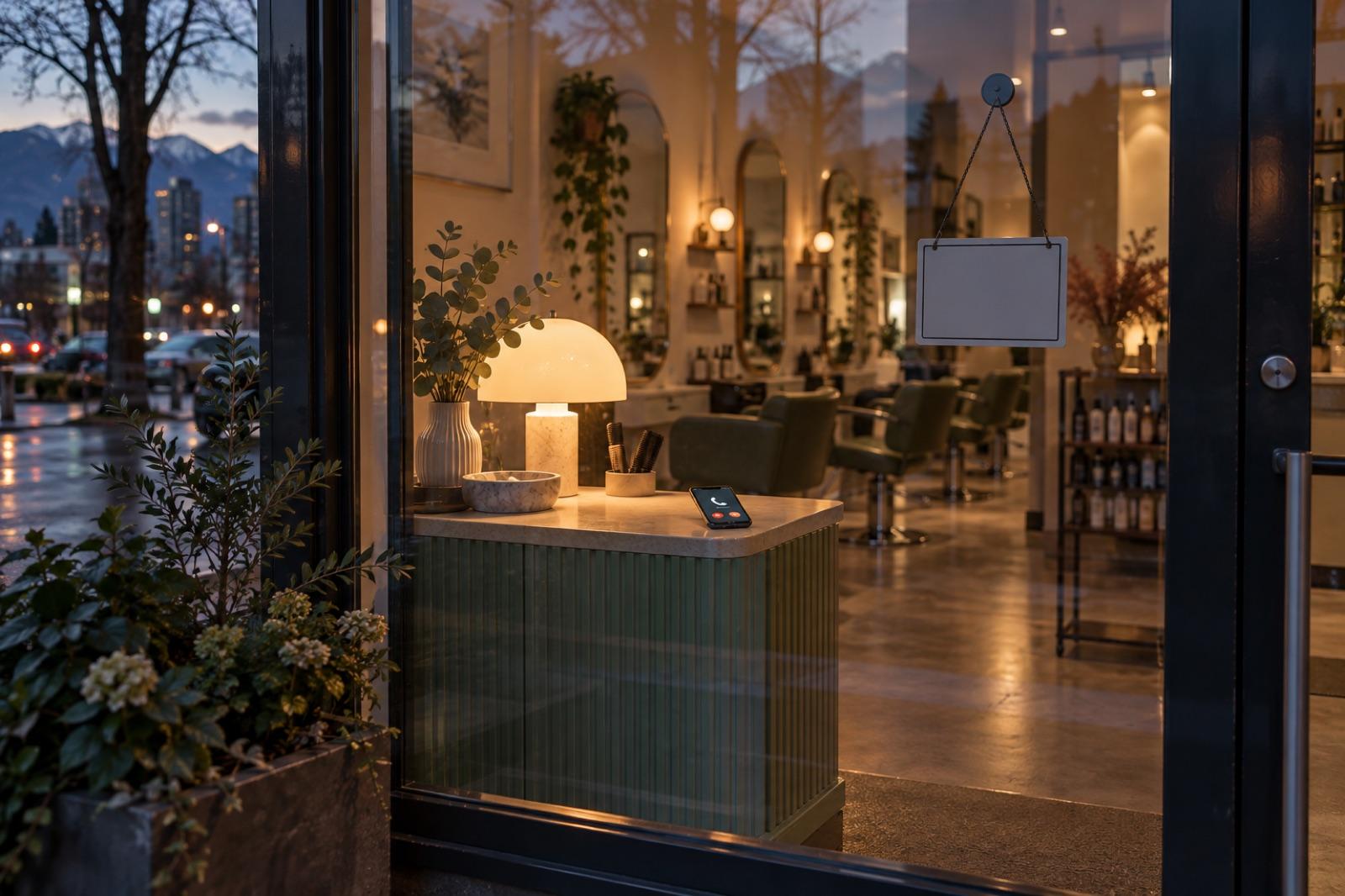
It’s 6:10 on a Tuesday. You’ve swept up, cashed out and locked the door. Across town, someone finally has a minute to sort out their hair, and they call you.
Your phone rings on the counter of an empty shop. Then it stops.
I call this the 6 pm problem, but it isn’t only about 6 pm. It’s any time the phone rings and nobody can pick up: mid-colour, mid-fade, up a ladder, under a car, driving between jobs.
Where the call actually goes
Think about the last time you called a business and got voicemail. Did you leave a message? Maybe. Or maybe you hung up, went back to the search results and tapped the next listing.
A caller who reaches voicemail has three options: leave a message and wait, try again tomorrow, or call someone else. Two of those ask them to do the waiting. The third is one tap away.
And when you call back at 9 the next morning, you’re calling someone who has had a whole evening to find another option. Some will still be waiting for you. Some won’t.
Voicemail isn’t useless. It’s just a dead end unless the caller does extra work. A missed-call text-back gives the call somewhere to go.
How a missed-call text-back works
When a call to your business number goes unanswered, the caller gets a text from that same number right away. It tells them who you are, apologizes for missing them and gives them a way to book. Here’s one for Cedar & Co. Hair — a made-up salon for this example:
Three parts do the work:
- Your name first. The caller knows who is texting: the business they just called.
- A booking link. If they wanted an appointment, they can pick a time themselves, tonight, without waiting for you.
- A way out. “Reply STOP to opt out” is right there in the text. If they don’t want texts, one word ends them.
If they reply instead (“Do you do colour corrections?”), the reply comes straight to you, and you answer when your hands are free. The text-back doesn’t answer the phone, and it doesn’t pretend to be you. It just makes sure the caller isn’t left with silence.
A walk-through with Cedar & Co. Hair
Say Cedar & Co. Hair, our made-up salon, closes at 6. At 6:40 pm, a new client calls about a cut. The phone rings out, and she gets the text above. She taps the link, sees each service with how long it takes and what it costs, and picks Thursday at 5:15. A confirmation arrives by text and email.
The owner sees none of this until the morning, when the appointment is already on the calendar. On Wednesday, the client gets a reminder.
A second caller that evening only wanted to know whether the salon does beard trims. He replies to the text with his question, and the owner answers at 8:30 the next morning. No booking yet, but no dead end either.
Not every caller books. Some just wanted your hours. The point is that each one gets an answer instead of a recording.
What it needs before it switches on
- A business number that can send texts. I set one up as part of launch.
- Carrier approval. Before your number can send business texts, carriers have to approve it, so the texts don’t get blocked as spam. I file the registration on day one; approval usually takes 1–2 weeks. Until it clears, missed calls are followed up by call and email.
- The right wording. The text-back is a reply to someone who just called you, so it reads like one: your business name, a question, a booking link and the STOP line. Anything beyond a reply, like an offer, waits until the person has said yes to hearing from you.
What to avoid
The text-back works because it’s a reply. Keep it that way.
- Don’t text people who never contacted you. A bought list, numbers copied off the internet, contacts from an old job: none of those are replies. Under Canada’s Anti-Spam Legislation (CASL), a commercial text needs consent, and a stranger on a list usually hasn’t given you any. More in my plain-English checklist for texting clients in BC.
- Don’t turn it into an ad. “Sorry we missed you — 20% off this week!” isn’t a reply any more. Keep offers out of it.
- Don’t chase. If they don’t write back, one follow-up at most. Silence is an answer too.
If you’d like this for your business, I’ll build you a free demo site — your name, your services, online booking — within 48 hours of a 15-minute call, and show you how the text-back works on that call. Not ready for a call? Start with a free video audit of your current site or Google profile.